The Bishop’s Pastoral Address May 1, 2015

The Bishop’s Pastoral Address

The Rt. Rev. Julian M. Dobbs L.TH, Th.M, D.D Missionary Bishop

Presented May 1, 2015 at the Diocesan Synod held in Wayne, Pennsylvania

In the name of God the Father, God the Son and God the Holy Spirit, Amen.

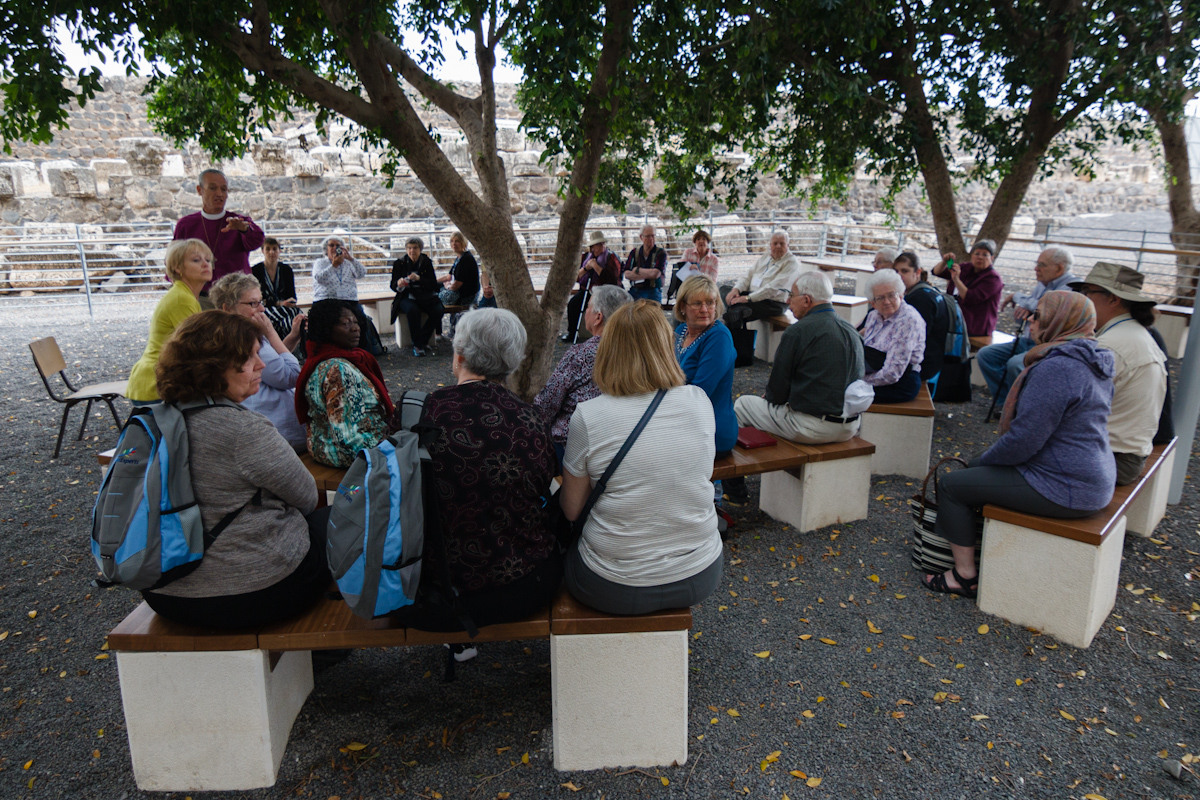
On a hillside just to the north of the Sea of Galilee, Jesus was teaching disciples about the Kingdom of God. Blessed are the poor in spirit, blessed are the meek, blessed are those
who hunger and thirst for righteousness sake. Blessed are the peacemakers, the pure in heart, the persecuted for righteousness sake. And then He said something even more astounding and incredible – Jesus commissions his disciples with a messianic title that He claimed for himself, “the light of the world”. Matthew chapter 5, verse 14, “You are the light [the fire]

1of the world. Let your light [your fire] radiate with brilliancy before others, so that they may see your good works and give glory to your Father who is in heaven.”

This powerful assignment from Jesus is the theme of our 2015 Synod, and yet, it is something much more significant than our theme. Our Lord’s commission to be the light of the world is being embraced by congregations, lay people and clergy across the Missionary Diocese of CANA East from Maine to Miami and from Tulsa Oklahoma to Virginia Beach.

Be the light of the world, in order that others may see your good works and give glory to your Father who is in heaven. [I will return to our Synod scripture before I conclude this pastoral address).

It is both an incredible privilege and honor for me to welcome The Most Rev. Dr. Benjamin Kwashi, the Bishop of Jos and the Archbishop of Jos Province, Church of Nigeria (Anglican Communion). The Anglican Province of Jos has been subjected to numerous horrific outbreaks of religious violence and acts of terrorism. Many thousands of Christians have been killed and numerous churches and associated buildings have been destroyed.

In 1987, Archbishops Kwashi’s church and vicarage were totally burned down in Christian- Muslim riots. He has survived three attempts on his life and speaks first hand of Almighty God’s grace and power experienced in the most difficult of situations.

Courage has come at a personal price for Archbishop Kwashi who has been personally targeted by Islamic extremists. His beautiful wife Gloria was badly beaten by Islamic extremists and dragged through the streets to the diocesan offices. She was left blind until surgery in Texas restored her sight. Almost 18 months later, as the family prepared to celebrate Gloria’s recovery, four young men arrived to kill Archbishop Kwashi, however the Lord rescued him and his family.

Archbishop Ben and his wife Gloria have six children. I have been a guest in their Jos home and privileged to minister in their diocese.

As the Anglican Church across the United States and Canada became increasingly unhinged from its biblical and historical theological moorings, God spoke to Archbishop Benjamin Kwashi about a vision for a new work, a new biblical mission where Anglicans would be ‘light to the world’ declaring and defending the gospel once for all entrusted to the saints.

Archbishop Kwashi’s vision would become in time the Convocation of Anglicans in North America.

Your Grace, The Missionary Diocese of CANA East exists today, in part, because of your vision for Anglican mission and ministry in North America. Thank you, Sir, for being a catalyst used by the Living God to establish the ministries represented in this gathering today.

Your Grace, on behalf of the delegates of the third Synod of the Missionary Diocese of CANA East, I welcome you among us. Brenda and I are honored to call you and Mama Gloria our friends. You are a modern day hero of the faith and one of the most courageous Christian leaders of our generation.

Thank you for responding to my invitation to gather together for this Synod of our Missionary Diocese. At our inaugural Synod three years ago, we began life as a diocese with 23 congregations and missions. Today, three years later, 31 congregations and missions call The Missionary Diocese of CANA East their jurisdictional home.
We remain one of four dioceses of the Convocation of Anglicans in North America and are full members of both The Anglican Church of North America and The Church of Nigeria (Anglican Communion).

During the past year, two beloved members of our clergy family have died. We remember with thanksgiving to God, The Rev. Gilbert Wilkes, III. There are many phrases attributed to Gil (some of them we must not mention in this setting) however, in an essay Gil wrote entitled, Death by Delay / A Failure of Fortitude, he said, “We have a problem, the time for delay and discussion is over, George Patton had good advice for those of us who claim Biblical Orthodoxy, “Lead, follow, or get the hell out of the way!” We also remember the untimely and tragic death of The Rev. Dr. Kent Hinkson, a much loved priest of our diocese and express our condolences, love and prayers to Mrs. Pam Wilkes and Mrs. Jeline Hinkson, their families and congregations.

A diocese is a family of Christians and congregations under the oversight of a bishop who voluntarily choose to belong to a synod. Though diverse in their service, the congregations of this diocese hold to a shared confession of the Christian faith as taught in Holy Scripture and the historic formularies of the Anglican Church.

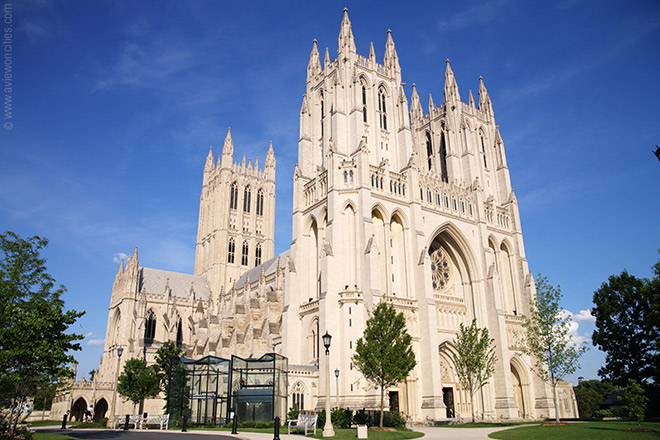
When many people think Anglican, they think Westminster Abbey, Lambeth Palace, grand cathedrals and local churches with high steeples and domes designed by such well known architects as Sir Christopher Wren. Sometimes we even make journeys to these Cathedrals of England and Europe, perhaps in an attempt to secure within us our Anglican heritage.

And yet, we in CANA East find ourselves in a missionary diocese. Our diocese was inaugurated in a rented chapel in the mountains of Ridgecrest, North Carolina in 2012 and our diocesan headquarters are in a shared facility with another Christian organizations in Virginia. Our pastors and lay leaders are missionaries. Our congregations are centers of missional activity and outreach. Sunday by Sunday the faithful congregations of CANA East are meeting for worship in missional contexts.

Holy Cross in Virginia Beach, Virginia meets each Sunday morning in a storefront.

St. Thomas’ in Springfield, Missouri meets week by week in the East Richmond Place home of Archdeacon Carl and Janet Eyberg.

Redeemer Church in Annapolis, Maryland meets at the Lowes Annapolis Hotel and from time to time in a photographers studio. Church of the Pentecost in Harrisburg, Pennsylvania, a congregation that was inaugurated less than two weeks ago and was officially received as a congregation of the diocese this morning, meets for worship at the Maple Street Fire House, complete with fire trucks and sirens… …[seems a most appropriate location for a church named after the outpouring of God the Holy Spirit on the Day of Pentecost]! Numerous congregations of the diocese meet in rented facilities, some share space with other churches, while others have been able to make the transition to more permanent locations.

This reality keeps us anchored in the missional commission from our Lord to be ‘light to the world’. Cathedral steeples, grand organs and elevated pulpits are not wrong, they are tremendous gifts to be used for the glory of God. However, our current expression of Anglicanism is somewhat different. As your bishop, I truly believe that Almighty God has called The Missionary Diocese of CANA East as a biblically reshaped mission seeking to reach North America with the transforming love of God. The Lord of the Church has given us a holy opportunity to re-examine our mission, our ministry, our structures and our national and global relationships, to fully engage in God’s call upon our lives. As a result, the optics of our mission may look different from traditional Anglican structures.

The ministry to which Christ has called us, presents us with a considerable challenge. Will we together as Anglicans in this Missionary Diocese, forgetting what is behind and straining forward to what awaits us, embrace the difficult challenge of our Lord, rise up and embrace the opportunities that are before us, or will we be more content to replicate the patterns and structures of our former days?

It was not long after their deliverance from the Egyptian oppressors that the children of Israel began to whine and complain about their circumstances. “We remember the fish we ate in Egypt that cost nothing, the cucumbers, the melons, the leeks, the onions, and the garlic. But now our strength is dried up, and there is nothing at all but this manna to look at.” I want to prayerfully and carefully remind us as a Missionary Diocese that we must not be complacent or overwhelmed and reinvent the less effective structures of the past. We remember the buildings, the trust fund money from dead people, the financial resources and legacies of the diocese, the choir vestments and the silver chalices donated by founding church families. We remember full time clergy salaries, annual stipend increases, retirement funds, renovated rectories, clergy discretionary funds and Synod’s that were in easy driving distance from our homes. We must be constantly vigilant against an all-too-human temptation to feel that the past was better, easier and so much less stressful.

If you are ever tempted to think the past was better, consider the present just for a moment. In the three years since the inauguration of this diocese 14 people have been ordained into holy orders (five more will be ordained at our service tomorrow). Nine new Anglican churches have been planted (including our host congregation here in Wayne).

St. Andrew’s in Endicott, New York, Church of Transformation in Mays Landing, New Jersey, Good Shepherd in Binghamton, New York, Holy Trinity in Plainville, Connecticut and Holy Trinity in Syracuse, New York all have new buildings of their own, some with no debt at all, some gifts from other congregations, all a result of the incredible provision of the Lord of the Church.

If you are ever tempted to think the past was better, consider for a moment the incredible clergy of this diocese.
They truly are incredible because they believe the call of God on their lives is a holy calling. This Missionary Diocese has been blessed by God with an extraordinary House of Clergy. Ordained men and women who believe that faithfulness to the gospel is greater than climbing the ecclesiastical ladder, or the increasing status of their 403b retirement plan.

Clergy who believe that proclaiming the Word of God and celebrating the sacraments is their highest calling, even if such proclamation is considered unpopular and archaic. Clergy who believe that serving the people entrusted to their pastoral care may even require them to have additional employment, to serve bi-vocationally as pastors and church planters.

In addition to preaching the Word of God, visiting the sick, serving the poor, burying the dead, leading church worship, raising money, responding to bishops:

Archdeacon Patrick Malone, Vicar of Holy Cross Anglican Church in New Berlin, Wisconsin leaves every week day morning at 6am and again at 2pm to drive public school buses so that his family are provided for and the growing congregation has ordained leadership.

While leading All Saints’ Anglican Church in Newark, New Jersey and serving as Archdeacon and advisor to the Bishop, the Venerable Dr. Paul Ekezie is employed as a geologist for the City of New York’s Department of Design and Construction.

While being the father of a ‘not yet 12 month old’ first child and the Vicar of Christ Church Anglican in Branford, Connecticut, The Rev. Matthew Mahan works 25 hours per seek as a department head for Hobby Lobby, in order to fulfill his calling as the leader of the congregation.

Church planter Canon-elect Augustine Unuigbe from Church of Transformation in Mays Landing, New Jersey, father of three, works nights as a medical doctor from 6.00pm to 6.00am, his wife Florence, also a doctor works days from 6.00am to 6.00pm. When Bishop Bena visited two weeks ago they had 30 people in attendance and took an offering of $654 for the diocese.

The Venerable Dr. Wayne Buchanan, Rector of St. Brendan’s in Tremont, Maine, Archdeacon of the North East, advisor and international travelling companion to the Bishop drives a 110 mile round trip twice a week to lecture in biblical studies and languages at Grace Evangelical College & Seminary.

Consider not only our clergy but also the often unspoken, un-thanked sacrificial service of our clergy spouses.

While balancing the very godly calling of motherhood and demands of being married to clergy (most of whom are ‘Type A’ personalities) many clergy spouses in this diocese have secured regular employment to enable their husbands to serve as rectors of our congregations.

Thank you clergy and spouses. Thank you on behalf of the Missionary Diocese of CANA East. You have been called to a life of dedicated sacrifice. To leave the palaces behind and follow Almighty God – through desert, swamp, mountains and across the wide rivers. To stand firm against the scoffers and the enemy. Your service is recognized, it is acknowledge and may Almighty God be thanked and praised of each of you.

And so, while the last twilight beams of our former jurisdiction might be a nostalgic memory of patterns, structures and financial certainty, consider what God is doing among us today. Today, He is clearly at work building His Church as He said He would, this should encourage and strengthen us in our mission!

Bishop John Jewell, 16th century Anglican English Reformer and Protestant Apologist, Anglican Bishop of Salisbury wrote, “Let us consider how mercifully God hath dealt with us. He hath restored unto us the light of his gospel, and hath taught us the secrets of his heavenly will. We hear him talk with us familiarly in the Scriptures, as a father talketh with his child. Thereby he kindleth our faith, and strengtheneth our hope; thereby our hearts receive joy and comfort.”

Three years ago, I presented to you what I believe to be the priorities of our mission together. When I presented my vision for this new missionary diocese at the 2012 Catalyst meeting held at Bishop Seabury Anglican Church, I announced eight focus areas that I believed the Lord laid upon my heart after prayer, consultation and planning. These eight areas of mission can be found in the online pamphlet entitled – “Come Let Us Arise and Build – a bishop’s vision for a missionary diocese.”

Last year as we gathered for our second Synod, I emphasized ‘Church Planting’ by asking each of our congregations to very prayerfully and intentionally consider planting one new congregation within the next three years.

How encouraging it was to hear that:

The Venerable Dr. Paul Ekezie is seriously planning a new church plant out of All Saints’ in Newark, New Jersey.

In his retirement, The Rev. Donald Helmandollar is considering planting in Rhode Island.

Church of the Pentecost, Church of Transformation, Reformation Anglican Church are all new church plants [and there are other conversations happening about church planting across the diocese].

Over the past year, a number of people have said to me, ‘We are not ready bishop, our current congregation is too small.’ You and your congregation are the best equipped to know when the timing and resources are right to plant, however the ‘too small’ argument is never a winner with me! Brenda and I, our then 18 month old son Samuel, and two additional couples planted Bishopdale Community Anglican Church, which by the grace of God became the fastest growing Anglican congregation in that location at that time.

Church planting is an achievable goal for most of our congregations. I strongly encourage and urge you to prayerfully prioritize church planting in your congregational planning this coming year.

I also spoke about ‘New Leadership’, recruiting, training and developing new clergy in our diocese. It has been significantly rewarding for me as your bishop to watch many of our congregations embrace this vision.

Christ the King Anglican Church in Pine Knot, Kentucky with a membership of 21 individuals is the sending congregation of Lucas Waters, a seminarian from this diocese at Trinity School for Ministry.

The Rev. Briane Turley, Rector of Church of The Holy Spirit in Tulsa, Oklahoma has brought 23 year old Seth Whitaker to this Synod, a young man clearly called by Almighty God into His service.

The Venerable Alan Crippen II is preparing post graduate Christian leaders for ministry in the public square through his ministry at the John Jay Institute where Roman Catholic students, Baptist students, Quaker Students, Non Denominational Students use they daily office of the 1928 Book of Common prayer in their formation as leaders.

Joel and Christy Lafferty are with us at this Synod. A young couple who believe that God is calling them to serve as missionaries abroad.

The Rev. Adam Rick is engaging with students at Eastern University in a weekly bible study, two of whom will be confirmed in this church on Sunday afternoon.

The Venerable Patrick Malone is assisting to train Deacon Lawrence McElrath who will serve as a chaplain in the United States Military [and there are many others].

As your Bishop, I firmly believe that educating and ‘unleashing’ the spiritual power, enthusiasm and entrepreneurial creativity of newly recruited and younger clergy is one of my highest priorities.

As we consider our Lord’s commission to be ‘the light of the world’ I believe the Lord is calling us to be a diocese that Confronts And Transforms Injustice Through Serving Our Community And Nation (this is a third focus area of my vision for a Missionary Diocese).

With foundations in the 16th century English reformation, Anglicans have been among the champions of numerous global movements that continue to be at the forefront of transforming unjust structures: William Wilberforce: Christian Abolitionist, Reformer, Statesman; Florence Nightingale, Nurse, Social Reformer. In our own nation, George Washington, John Jay, James Madison, all Anglicans who have impacted their own immediate situations and

influenced global movements from the rise of democracy and the rule of law, to religious freedom, human rights, and the abolition of slavery.

At this Synod we will hear from Church of the Good Shepherd in Binghamton, New York, Glory of God in Cocoa, Florida, St. Brendan’s in Tremont, Maine and Church of the Holy Spirit in Tulsa, Oklahoma who are fulfilling our Lord’s commission to be ‘the light of the world’ in very practical and effective ways.

Many congregations and individuals across the Missionary Diocese of CANA East are serving as a voice for the voiceless, ministering to those in our prisons, visiting and caring for those who are lost and lonely, for refugees and immigrants.

As your bishop, I invite each of the congregations and members of this wonderful Missionary Diocese to pray and plan to be the voice of Christ and the hands of Christ in our communities and across our nation. Pack food at your local community pantry, train as a hospice volunteer, serve at your local emergency-housing center.

As Fanny Crosby said in her famous 19th century hymn:

Rescue the perishing, care for the dying, snatch them in pity from sin and the grave; weep o’er the erring one, lift up the fallen, tell them of Jesus, the mighty to save.

What does the Lord require of us but to do justice, and to love kindness, and to walk humbly with your God.

Before I turn for a few moments to our Synod Scripture I want to acknowledge some faithful servants of Christ in our diocese.

Almighty God has blessed CANA East with lay leaders and clergy who serve well above and beyond the call of duty, our Standing Committee, Diocesan Secretary, Canons Missioner, our six Regional Archdeacons and many others are just a few of the faithful whose ministry is The Missionary Diocese of CANA East.

Alongside running his busy law practice in Syracuse, New York our Chancellor, Mr. Raymond Dague, offers legal advice to clergy and congregations of our diocese in matters relating to mission and ministry. There have been numerous occasions when my first SMS
of the day between 5.30am – 6.00am has come from our Chancellor who has already been hard at work that morning on legal matters requiring his attention in our diocese. However, there have also been occasions when I have woken our chancellor for advice while travelling internationally in different time zones. Raymond, on behalf of this diocese we honor you Sir, and thank you for your invaluable advice and servants heart in the mission we share in this diocese.

Earlier this year at a bishops meeting of the Anglican Church in North America, The Archbishop asked for a ‘show of hands’ from the bishops who might retire in 5 – 7 years. Out of the corner of my eye, I noticed the hand of Bishop David Bena begin to move heavenwards. In a response of astonishment from the opposite side of the room, I called out to our assisting bishop, “Put you hand down David Bena,” and if I recall correctly, Bishop Bena lowered his hand.

There are no words to express the gratitude of this diocese and my personal gratitude for the faithful, exceptional and outstanding service of Bishop Dave and Mary Ellen Bena. Bishop Bena even walks my two 70 pound boxer dogs and is my official marathon running coach. The only way to adequately thank them both is to say, “Thank you Jesus! Thank you Jesus! Thank you Jesus!”

My Executive Team, Canon-elect Neal Brown who serves faithfully as our Executive Canon, without any remuneration can only be described as a gift from heaven. Neal, may God be praised for your service to this Missionary diocese. Mr. William Reynolds our financial administrator and Miss Moriya French who serves as assistant to Brenda and me are genuine gifts from God who serve willingly and faithfully. Thank you for the gift of your partnership in the leadership of this wonderful diocese.

My ministry as your bishop does not stand on its own. By now, most you have come to realize that my greatest gift is not preaching or teaching, leadership, raising money or speaking to media. My greatest gift is she, who for the past 24 years has preferred the background rather the foreground. Proverbs says, He who finds a wife finds a good thing and obtains favor from the Lord. My wife who loves me, prays for me, believes in me, corrects and forgives me, together with our family who are represented here today by our daughter Grace Elizabeth (of whom I am so proud) have helped shape me into the bishop that I am today. Brenda I love you. I thank God for you. I rejoice that in the remote West Coast of New Zealand’s South Island, the Lord brought you and me together in covenant love and marriage.

I wonder if you believe it is possible for a nation or society to be changed and to be made more pleasing to God? We all know that by the grace and power of God, we ourselves have been changed and we know the power of the gospel to change individual people. But can society be changed?

For a moment let us consider our nation. Our view of marriage and the family, our attitude to human life and its sanctity, including the unborn and the senile, the administration of justice, the education of our young people. Consider our treatment of the unemployed and of men, women and children who are trapped in the cycle of addiction, deprivation and poverty. Consider our nation’s record in human rights, ethnic minorities, stewardship of the natural environment. At the heart of every nation there lies an ideology, a set of values, meanings, inalienable rights.

Here is the question for the Missionary Diocese of Cana East: Is it possible for the values and standards of Jesus Christ to prevail in North America so that our national culture is recognizably Christian?

According to last month’s Pew Foundation entitled, “The Future of World Religions,” the religious profile of the world is rapidly changing. In the United States, Christians will decline from more than three-quarters of the population in 2010 to two-thirds in 2050. Judaism will no longer be the largest non-Christian religion. Muslims will be more numerous in the United States than people who identify as Jewish on the basis of religion. More globally, four out of every 10 Christians in the world will live in sub-Saharan Africa.

I believe it is the will and purpose of Jesus Christ to transform society through his transformed people.

Please open your bibles to Matthew chapter 5:13-16

You are the salt of the earth, but if salt has lost its taste, how shall its saltiness be restored? It is no longer good for anything except to be thrown out and trampled under people’s feet. “You are the light of the world. A city set on a hill cannot be hidden. Nor do people light a lamp and put it under a basket, but on a stand, and it gives light to all in the house. In the same way, let your light shine before others, so that they may see your good works and give glory to your Father who is in heaven.”

Salt and light. These are the biblical images that our Lord Jesus himself chose in order to indicate the influence his followers are to exert in society.

Not unlike many of the congregations in our diocese, the disciples of Jesus were small in number and yet, Jesus called them the light of the world, the salt of the earth, and the question is what did he mean?

1. Contrasting Communities (vs:13-16) Christians are radically different from non- Christians, in Matthew 5:13-16, there are two communities, the Christian and the non- Christian, the redeemed and the unredeemed, the regenerate and the unregenerate communities in radical contrast from each other.

On one hand, there is the world with all its sin, evil and tragedy – – a dark place, and yet, on the other hand, there are disciples of Jesus Christ who are to be the dark world’s light. Christians and the world are set opposite each other and are as different as light from darkness. The world, which is rather like decaying fish or rotting meat because of its social decay, and Christians, who are to be decaying society’s salt.

Almighty God is calling out a people for himself to be his own community, the new community, the Messianic community, the community of Jesus Christ and listen, the vocation of this new community, is to be holy.

Jesus calls his new community to be salt and light to society, to be radically different.

2. Penetrating Pilgrims (vs.16) Christians are to penetrate non-Christian society. We are called by Christ to be morally and spiritually distinct.
We are not a socially segregated people. Look at verse 16, Jesus said, “Let your light shine. Let it penetrate into the darkness. Do not light your lamp and put it under a bed or under a bucket or in a cupboard. No, when you light your lamp, set it on a lamp-stand, that it may give light to the house. Let the light shine, let it penetrate.”

Both light and salt are both penetrating commodities. And yet, the great Christian tragedy is that so many disciples of Jesus Christ stay in our dark little dens and in our elegant ecclesiastical saltcellars, instead of getting rubbed into the community. Brothers and sisters, this is Christ’s call to us.

Remember Jesus himself came into the world and that is where he sends us.

3. Influential Inhabitants (vs.16) Salt does not salt itself. It salts the environment in which it is placed. Light does not enlighten itself. It is given to light the community in which it is lit. Jesus said, “Let your light shine before others, so that they may see your good works.” Influential inhabitants.

Both salt and light are effective commodities and they both change the environment in which they are placed. If you put salt in meat or fish, bacterial decay is hindered. If you switch on the light, darkness is dispelled.

When we look at the prevailing trends in our nation we see social injustice, racial disadvantage, neglect of inner cities, the continuing evil of unemployment, violence on the streets, selfish covetous materialism, corruption in high places, the breakdown of marriage and the family, sexual promiscuity, the disregard for the sanctity of human life, the deliberate eradication of religious freedom.

Who is to blame for the deterioration of standards in society? The media? The Administration? The agenda of theological and social revisionists? Well, yes, in part!

Brothers and sisters of CANA East, if society is decaying, we the Christians are responsible!

If the house is dark at night, there is no wisdom in blaming the house for the darkness. The question to ask is where is the light? If the meat goes bad and becomes inedible, there is no wisdom in blaming the meat for its decay. The question to ask is, “Where is the salt?”

If society becomes corrupt, like a dark night or a stinking fish, there is no sense in blaming society for its corruption. This is what happens when human evil is unrestrained. The question to ask is, “Where is the Church? Where is the salt and the light of Jesus Christ? Why are not we dispelling the darkness and hindering the decay?”

Brothers and sisters, it is hypocritical of us to raise our eyebrows and shrug our shoulders and wring our hands and blame the government. Jesus told us to be the salt and the light of society.
If rottenness and darkness abound, we have to accept a measure of blame and with fresh determination be the salt and light our Lord is calling us to be.

History is full of examples of societal transformation when people encounter the gospel in practical ways.

The Rev. Georgette Forney (CANA deacon) is with us at this Synod representing Anglicans For Life. Through this remarkable ministry the unborn are being saved from cruel and barbaric extermination and life in North America is being preserved. CANA deacon The Rev. Bob Ragan leads Regeneration Ministries helping those caught in cycles of sexual or relational sin to find freedom. Mrs. Faith McDonnell from The Institute on Religion and Democracy is with us at this Synod. They seek to reform the Church’s role in public life, protect religious freedom, and support democracy at home and abroad.

How do we go about being light in what sometimes appears as the ever increasing darkness of social and political change. God in his loving mercy has given us tools for the task.

1. We Pray: Christian prayer is different from every other kind of prayer because at the center of Christian prayer is Jesus Christ. The New Testament urges Christians to pray for the nations and their leaders, that we may lead a quiet and peaceable life in all godliness – – this is the will of God.

2. We Evangelize: Evangelism has an indispensable place in social action. Christian social action is impossible without socially active Christians, and socially active Christians emerge out of evangelism. It is when people are born again by the Spirit of God that He gives them a tender social conscience. We have a gospel to proclaim that will transform society. We pray. We evangelize.

3. We Engage. Brenda and I live in the suburbs of our Nation’s Capital. I spend some of my days engaging Congressmen, Senators and Administration officials over gospel matters. Some of you are doing the same. Why? Because godly legislation can reduce evil in society and make it more pleasing to God. Martin Luther King said, “Morality cannot be legislated, but behavior can be regulated. Laws may not change the heart, but they can restrict the heartless.”

Brothers and sisters of the Missionary Diocese of CANA East, Jesus is still calling us to be the light of the world.

American author Robert Bellah was the Elliott Professor Emeritus of Sociology at the University of California at Berkeley. He said: “We should not underestimate the significance of the small group of people who have a new vision… the quality of a culture may be changed when two percent of its people have a new vision”.

Two percent! Two percent of Pensacola, Florida! Two percent of New York City!…
Two percent of Branford, Connecticut. Consider the impact you can have on your church. Consider the impact Christians can have on their community. Consider the impact we can have on our nation. Consider the impact Christians can have in the world!

Our concern as followers of Jesus Christ is neither with a religion called “Christianity,” a denomination called “Anglican,” nor with a culture called “Western,” but with a person, Jesus of Nazareth, the one and only God-man who lived a perfect life of love, died on the cross for our sins, bearing in his own person the condemnation that we deserve, was raised in triumph from the grave and is now alive, accessible and available to us through the Holy Spirit, the One who was and is and is to come!

Missionary Diocese of CANA East, only in Him can we become the world’s salt and light, sharing the good news with others, making an impact on society, and above everything else, seeking to bring honor and glory to his wonderful Name. Amen!

This is our mission!

In the name of God the Father, God the Son and God the Holy Spirit, Amen.

The Rt. Rev. Julian M. Dobbs L.TH, Th.M, D.D Missionary Bishop
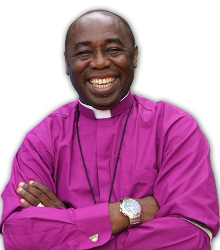
Archbishop Ben Kwashi to speak at CANA East Synod (April 30 – May 2, 2015)

Archbishop Ben Kwashi, a well known as a preacher and evangelist throughout Nigeria, Africa, England and the United States will be speaking at the CANA East Synod, April 30-May 2, 2015 in Wayne, Pennsylvania.

Bishop Julian Dobbs describes him as, “One of the most importaBenjamin Kwashi webnt and courageous Christian leaders of our generation.”
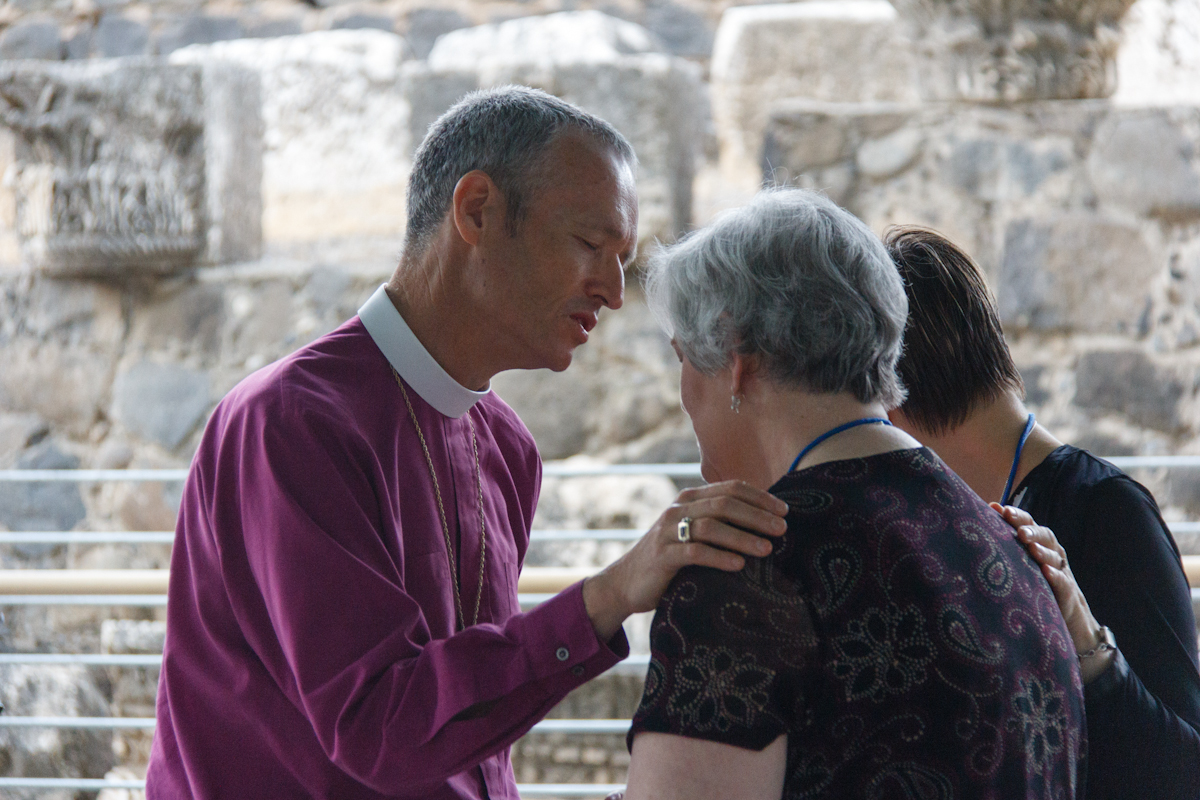
Originally destined for a military career, in 1976 Archbishop Kwashi received a clear vocation to ordained ministry. He was ordained in 1982 and 10 years later became Bishop of Jos. In January 2008 he was presented as the Archbishop of Jos Province in the Church of Nigeria (Anglican Communion). He has worked in rural and urban churches, as a Polytechnic Chaplain, and at a Theological College.  In 1987 his church and vicarage were totally burned down in Christian-Muslim riots. He and his wife Gloria have six children.

 Archbishop Kwashi has survived three attempts on his life. He can speak first hand of God’s grace and power, experienced in the most difficult of situations. The province of Jos covers North Eastern Nigeria, which has had numerous outbreaks of religious violence where Christians have been targeted by Islamist militants. The Archbishop has been outspoken and openly critical of the press and the authorities whenever he has witnessed lies and injustice.

Such courage has come at a price, for Archbishop Kwashi who has been personally targeted and his wife, Gloria, and son have been badly beaten. On that occasion, Gloria was dragged through the streets to the diocesan offices. She was left blind until an operation in Texas restored her sight. Almost 18 months later, as the family prepared to celebrate Gloria’s recovery, four young men arrived to kill the Archbishop, who immediately fell to his knees to pray. “Man of God, we have come for you,” they said. “This is not the time for prayer.” They took him outside but stopped to negotiate the price of his life. One of them screamed. “I’ve changed my mind. Let’s take him back inside and kill him there.” It never happened. They took what money Gloria could find and disappeared into the night. That’s something of what contending for the faith has meant for Ben and Gloria Kwashi.

CANA East is one of four missionary dioceses in the Convocation of Anglicans in North America. Home to 31 congregations and almost 70 ordained clergy, CANA East is committed to planting and building biblical missionary Anglican churches across North America.

All are welcome to attend Synod and meet Archbishop Kwashi.

Register for Synod at this link

The Resurrection of Our Lord | April 2015

Come and see…  Now go and tell

“Do not be alarmed. You seek Jesus of Nazareth, who was crucified. He has risen; he is not here. See the place where they laid him. But go, tell his disciples and Peter that he is going before you to Galilee. There you will see him, just as he told you.”  Mark chapter 16 verses 6-8
In Mark’s gospel, two women both named Mary, visit the garden tomb on the first Resurrection Sunday morning.  They find the stone which had sealed the tomb already rolled away, they encounter an angelic messenger who speaks to them about the risen Messiah and they see with their own eyes the tomb of Jesus is empty. And yet, we are told in verse 8…”they went out and fled from the tomb, for trembling and astonishment had seized them, and they said nothing to anyone, for they were afraid.”

The angel said to them, “Come and see, now go and tell.”

This is the Christian gospel in a sentence: come and see for yourself and now go and tell someone else about it.

In the longer ending of Mark’s gospel, Jesus commissioned the disciples to go into the whole world, preach everywhere, believe and baptize. Life and death is at stake because if someone does not believe in the risen Christ, they are lost. And so, obeying the commission of the risen Lord, the disciples go out with a pile of evidence, with hearts full of experience and the risen Lord Jesus went with them everywhere they went.

Just as the risen Lord was with them, so too He is with us who believe. May the evidence of the rolled stone, the empty tomb, the heavenly angel, the testimony of the disciples, give way to an experience with the risen Christ, that we too may “Come and see and go and tell.”

Christ is Risen… He is Risen Indeed!

+Julian

Easter, 2015

Bishop Dobbs Pastoral Address to the CANA Council 2015

Presented March 20, 2015 at the Annual CANA Council held in McLean, Virginia.

In the name of God the Father, God the Son and God the Holy Spirit. Amen

I welcome each of you to this annual Council meeting of the Convocation of Anglicans in North America. I am thankful for each one of you and the considerable investment of leadership, time and finance that is indicated by your attendance at this meeting over the coming days.

I am especially grateful for the presence of the Most Rev. Michael Akinyemi, Archbishop of the Ecclesiastical Province of Kwara and The Most Rev. Ignatius Kattey, Archbishop of the Ecclesiastical Province of Niger Delta. Your Graces’, you are very welcome among us. You honor us in CANA with your attendance at this year’s council meeting. Your presence among us signifies the foundational relationship that continues to be secure and strong between the Church of Nigeria (Anglican Communion) and the Convocation of Anglicans in North America. I will say more about the relationship between the Church of Nigeria and CANA later in this address.

As your Missionary Bishop, it is my responsibility to present this pastoral address to our Convocation. In this address I will talk about our life together as a Convocation, our relationships with the Church of Nigeria (Anglican Communion) and the Anglican Church in North America and we will study the Council Scripture from Philippians chapter 3.

2015 is a very significant year for our Convocation. On August 2nd, 2005 CANA was legally incorporated in the State of Texas. This year marks the tenth anniversary of our official incorporation as an Anglican missionary jurisdiction in North America. CANA began with a handful of faithful and courageous ex-patriot Nigerian congregations who were desirous of maintaining a direct relationship with the Church of Nigeria (Anglican Communion) amidst the turbulent theological revisionism that was reshaping the Anglican Church in the United States and Canada. Very soon after our founding it became clear that CANA was considered a very desirable jurisdiction not only for ex-patriot Nigeria clergy and congregations but many North American clergy and congregations who upheld historic biblical Anglican Christianity.

At the time, the response of the established hierarchy in New York and London was that our actions were ‘unhelpful’ and violate historic Anglican polity.

As recently as last month, when I was visiting the United Kingdom, I was asked if a jurisdiction of the Church of Nigeria within the boundaries of another Province in North America could be considered as Anglican?

So let us pause and consider exactly what it means to be Anglican. The Church of England states, “The Scriptures and the Gospels, the Apostolic Church and the early Church Fathers, are the foundation of Anglican faith and worship.”[1]

Furthermore it is stated that Anglicans profess the faith that is uniquely revealed in the Bible and set forth in the Catholic Creeds (the statements of faith developed in the Early Church that are still used in the Church’s worship today).

Anglicans also bear witness to Christian truth in historic texts that were developed in the sixteenth and seventeenth centuries: the Thirty-nine Articles of Religion, the Book of Common Prayer and the Ordinal (services for ordaining bishops, priests and deacons).

When these fundamental beliefs and foundations are revised and under assault, the Church must respond. So called ‘violations of Anglican polity’ must never be our priority, however when the gospel message of our Lord Jesus Christ is assaulted, Biblical theology must always trump organizational unity. Our priority must always be Christ and the gospel ‘once for all entrusted to the saints.’[2]

It was Hugh Latimer, one of the three Oxford Anglican martyrs who said in a sermon, “Unity must be according to God’s holy word… we ought never to regard unity so much that we forsake God’s word for her sake.” [3]

In what my friend The Rev. Ian McNaughton calls in his commentary on John chapter 17 “The Real Lord’s Prayer,” Jesus does not pray for cheap or superficial unity. He prays that the church may be organically unified to the Father and the Son sharing the divine life, reflecting and embodying the very unity which Jesus has with the Father.

So, if our proclamation of the gospel and our structural organization as a missionary jurisdiction in North America is ‘not quite cricket’ as the ‘Brits’ like to say, so be it, for the sake of Christ and His Kingdom

In his inaugural address to the first Council of the Convocation of Anglicans in North America, founding Missionary Bishop, The Rt. Rev. Martyn Minns said,

CANA is excited about the future. We have good news of great joy for those who live in the darkness of a post-modern world that has few answers and many questions. We believe that we have a message of hope for those who live in fear and the promise of new life for those who have lost their way. CANA is not primarily concerned about DOING church but about BEING church.

CANA was missionary then and she is missionary now. As a Convocation we exist not only as a jurisdiction for the 120 congregations and 450 clergy and chaplains who serve as members of our Convocation, we exist as a missionary movement called by Almighty God to replant biblical missionary Anglican Christianity across North America. This is the mission to which we in CANA have all been called by Almighty God.

Perhaps now, more than any other time in the history of North America we must zealously pursue our missionary mandate to make disciples of Jesus Christ.

An op-ed written in a January 2015 edition of the L A Times said, “More children are “growing up godless” than at any other time in our nation’s history. They are the offspring of an expanding secular population that includes a relatively new and burgeoning category of Americans called the “Nones,” so nicknamed because they identified themselves as believing in “nothing in particular.”[4]

The author was in fact celebrating this trend and the secularization of American society. He stated that 30% of Americans between the ages of 18 and 29 are without any religion at all.

Brothers and sisters in Christ, these concerning and disturbing statistics are not obstacles that prevent us from impacting our society with the love of God, they are in fact tremendous mission opportunities to teach and share the gospel message, to uphold the sanctity of every human life, to engage our nation in discussion and teaching about the value, impact and history of biblical marriage and family life.

From its founding until this very moment, we in the Convocation of Anglicans in North America know that without Him we are nothing, but with Him there are no challenges or obstacles that we cannot overcome.

No, in all these things we are more than conquerors through him who loved us. For I am convinced that neither death nor life, neither angels nor demons, neither the present nor the future, nor any powers, neither height nor depth, nor anything else in all creation, will be able to separate us from the love of God that is in Christ Jesus our Lord. (Romans 8:37-39)

CANA’s ministry is greatly impacted and strengthened by its bishops, dioceses and ministries.

The Jurisdiction of the Armed Forces and Chaplaincy, under the oversight of The Rt. Rev. Derek Jones supports the endorsement and care of chaplains under the oversight of the Bishop of the Armed Forces and Chaplaincy serving in the US military, federal and local government, hospital and hospice, law enforcement and other vocational and volunteer chaplains serving their communities. ‘Anglican Chaplains’ is a remarkable ministry. In June 2014, Mama Cana and I had the privilege of supporting Bishop Jones at his installation as the diocesan bishop of this special jurisdiction. We are very proud and honored that the jurisdiction remains an important part of our Convocation and Bishop Jones a full and active part of our shared life together.

The Missionary Diocese of CANA West, under the leadership of The Rt. Rev. Felix Orji, the diocese believes that the Church is the place where people come to worship God in Spirit and Truth, get converted through penitent faith in Christ as Savior, experience true saving and sanctifying grace through the gospel, feed from the Bible, learn humility, fellowship, love, obedience and faithfulness, be empowered by the Holy Spirit and equipped to live like disciples and followers of Christ who go out and make more disciples for Christ to the glory of God the Father.

Bishop Orji is a very active voice in our life together and his leadership is highly respected in our Convocation.

The Missionary Diocese of the Trinity, under the leadership of The Rt. Rev. Amos Fagbamiye is a Diocese composed of believers united by a common faith in the Lord Jesus Christ. United by a commitment to be Christ centered and all inclusive, serving a multicultural and multiracial community of faith. MDT is a full fledged ecclesiastical unit that operates as a missionary, evangelical and church planting mission and movement as a non-geographical cluster of churches and congregations in North America and Canada. I am very thankful to God for Bishop Fagbamiye and his leadership of the diocese and very much look forward to being in Indianapolis in July for the synod of the MDT.

In addition to my ministry as your Missionary Bishop, I also have the deep privilege of serving as the Bishop of the Missionary Diocese of CANA East. The diocese stretches from Maine to Miami and from Tulsa to The Bronx. Headquartered here in McLean, Virginia — we are home to 31 congregations and over 65 parochial and non-parochial clergy.

In addition to the diocesan bishops, CANA is blessed by God to be served by Bishop Dave and Mary Ellen Bena in Virginia, Bishop David and Mary Ann Anderson in Georgia, Bishop Roger and Gretsie Ames in Ohio and Bishop Martyn and Angela Minns in Florida.

I commend our CANA bishops to your personal and public prayers. These faithful men, their wives and families often find themselves on the front line of intense spiritual pressure. Pray that Almighty God would protect them and their familes, provide for them, empower them and use their lives for His glory alone.

CANA – The Church of Nigeria [Anglican Communion]

The Church of Nigeria [Anglican Communion] established CANA as a Holy Spirit-filled, gospel-centered, apostolically commanded, incredible gift to rebuild and replant biblical Anglicanism in North America.

At this juncture I wish to acknowledge the outstanding leadership of our Primate, The Most Rev. Nicholas D. Okoh. Archbishop Okoh takes a genuine and personal interest in the life and ministry of our Convocation. In August last year, the Primate made his Primatial visit to CANA and spent time in Houston, Texas, here at the CANA Headquarters in Virginia, in Newark, New Jersey and then in Vancouver, Canada.

He held very informative and instructive meetings with the CANA bishops here in our offices and participated in the life of CANA across North America.

I describe the relationship between the Church of Nigeria (Anglican Communion) and CANA by the following five explanations: Christ centered, legally established, missionally empowered, mutually affirming and unimpeachably Anglican.

Christ Centered: The Church of Nigeria (Anglican Communion) and CANA express our loyalty as disciples to the King of kings, the Lord Jesus.

 Legally Established: The Church of Nigeria (Anglican Communion) legally amended its Constitution and Canons to accommodate for missionary convocations outside the geographical boundaries of Nigeria.

Missionally Empowered: The Church of Nigeria seeks to empower the bishops, clergy and congregations of CANA to develop biblical, evangelical and growing ministries.

Mutually Affirming: Both the Church of Nigeria and CANA benefit from the Christ centered interconnection which is the foundation of the relationship.

Unimpeachably Anglican: The Church of Nigeria and the Convocation of Anglicans in North America maintain the historic Faith, doctrine, sacrament and discipline of the one holy, catholic, and apostolic Church as the Lord has commanded in His holy word and as the same are received as taught in the Book of Common Prayer and the ordinal of 1662 and in the Thirty-Nine Article of Religion. The relationship provides CANA bishops, clergy and congregations with canonical residence in the Church of Nigeria (Anglican Communion) with the same status as bishops, clergy and congregations from within Nigeria.

As many of you will be aware, Nigeria as a nation is facing challenges on numerous fronts. Politically, the general election which has now been delayed until March 28, has caused some unrest and tension across the country. Religious tension has reached unprecedented levels with jihadi terrorist group Boko Haram declaring allegiance with the Islamic State. Although Nigeria was able to tackle the Ebola crisis much more effectively than other African countries, it remains stricken by the insurgency of Boko Haram in the north east of the country, a crisis which is proving to be even more deadly than the killer disease. More people have been killed in Nigeria by Boko Haram than have died in the entire Ebola epidemic, and the bloodletting seems to be only getting worse. Over 10,000 people have been murdered at the hands of Boko Haram in the last year alone. Many of our Anglican bishops and congregations have been affected.   In a courageous display of tenacious and defiant faith, the Archbishop of Maiduguri told me last month that when the bombs explode in Maiduguri, the Christians have determined not to flee, but to gather in their churches and pray.

I am very thankful to The Lord for the godly and strong relationship between the Church of Nigeria (Anglican Communion) and the Convocation of Anglicans in North America. As your Missionary Bishop, I indicate to this Council, that although we may come under pressure to dissolve or change the status of the current relationship with the Church of Nigeria, the relationship is secure, it is highly valued by the CANA bishops and is the foundation of our affinity together in the mission to which Christ has called us.

I support introducing a motion during our business session calling upon this Council to express its support for the continued relationship that exists between The Church of Nigeria (Anglican Communion) and the Convocation of Anglicans in North America and in addition expressing this council’s serious concerns and prayerful engagement on behalf of Christians in Nigeria and everyone whose life and livelihood have been or are being devastated by the attacks of Boko Haram.

The Anglican Church in North America

In addition to the jurisdictional structure with the Church of Nigeria (Anglican Communion), CANA is a founding jurisdiction and full member of the Anglican Church in North America.

As such, the CANA bishops serve as bishops of the Anglican Church in North America and CANA dioceses, congregations and clergy are members of the Anglican Church in North America.

This the first CANA Council to meet since the election of The Most Rev. Dr. Foley Beach as Archbishop and Primate of The Anglican Church of North America and I warmly welcome a motion that will be introduced at our business session expressing goodwill and support for Archbishop Beach and the mission and ministry of the Anglican Church in North America.

While the Anglican Church of North America is not currently an officially recognized province of the Anglican Communion, the Church of Nigeria was the first province to formally and unanimously recognize the Anglican Church in North America. Both provinces enjoy full communion with one another through common membership in the Global Anglican Future Conference (GAFCON).

The Anglican Church in North America canonically provides for both affinity jurisdictions (dioceses) and regional jurisdictions (dioceses). Article IV Part II of the Constitution of The Anglican Church in North America says, “Congregations and clergy are related together in a diocese or network (whether regional or affinity-based), united by a bishop.”[5]

There has been considerable recent discussion in The Anglican Church in North America about the challenges of multiple overlapping dioceses and jurisdictions. Archbishop Beach has asked me to serve as a member of the Anglican Unity Task Force, which is considering this matter. I am less anxious about the multiple jurisdictions in The Anglican Church in North America because I firmly believe that to be effective gospel missionaries in the 21st century we must move from territory-centered structures to missional and relational structures. This requires us to build Christ-centered relationships with one another, to think ‘outside the box’ and to do whatever it takes to replant and rebuild biblical missionary Anglican churches across North America that faithfully proclaim the gospel and see numerous people converted to faith in Christ.

The relationship between The Church of Nigeria (Anglican Communion), The Anglican Church in North America and the Convocation of Anglicans in North America is governed by a protocol which was renewed and signed in 2013. This protocol provides a mechanism for the election of new bishops, governance and jurisdictional matters and relationships between CANA dioceses and the dioceses of the ACNA.

I encourage your private and public intercession for Archbishop Beach and the Anglican Church in North America.

CANA Governance 

At our 2014 meeting this Council unanimously approved significant changes to the way the Convocation is governed. The Council agreed to dissolve and disband the Executive Committee and strengthen the CANA Board of Trustees. The Board now consists of the CANA diocesan bishops and one elected lay representative from each CANA diocese. In addition, the Missionary Bishop is permitted to appoint no more than two delegates from across the convocation to help ensure that the Board of Trustees is properly representative of the full Convocation.

I am very grateful to the current Trustees who have steered CANA from its founding to the remarkable Convocation which is represented at this Council Meeting: Abraham Yisa, Esquire, The Honorable Samuel Thomsen, Mrs. Patience Oruh, General Robert Beasley and Chief Jimmy Delano. Thank you all for your exceptional leadership and for your personal investment in the leadership of CANA. Under our amended structure, these five Trustees are entitled to serve one additional two year term on the Board.

As required by our by-laws, the Primate of all Nigeria has signed the amendments and we are now governed under this amended structure.

I especially want to acknowledge the significant and invaluable support of our Chancellor, Scott Ward, Esquire. Scott continues to serve this Convocation with Christ like humility and dedication. His wisdom and legal counsel are a gift from God and sincerely appreciated by me as Missionary Bishop and my executive team. Thank you Scott for your support and friendship. Thank you for your wisdom, guidance and prayers and very especially on behalf of this Council, thank you to your wife Susan and your daughters Meghan and Emma who so graciously share you with us (sometimes at very short notice).

CANA Headquarters

I am incredibly grateful for my small and very dedicated executive team at the CANA Headquarters in Virginia. The Rev. Canon Neal Brown continues to serve voluntarily as our CANA Administrator and offers much needed leadership, especially given my demanding travel schedule. Mrs. Brenda Dobbs continues to serve as the CANA Registrar, ensuring that our dioceses share common procedures and our database of clergy and congregations remain current.

Mr. William Reynolds is our new book-keeper giving management to the CANA finances. Miss Moriya French serves as administrative assistant to the Registrar and myself. Our modest offices are located within the Barnabas Aid complex here in McLean, Virginia. Barnabas Aid works to support Christians where they are suffering and under pressures as a result of their faith in Jesus Christ. I strongly commend the work of Barnabas Aid to each of you, your congregations and dioceses as a mission organization worthy of your prayer and financial support.

Last year’s CANA Council resolved that each CANA congregation tithe a minimum of 4% of their income to their respective diocese. This will enable each diocese to make their required contribution of $750 per month to the CANA Headquarters. This has proven to be a challenge for some congregations and dioceses, however I encourage you that generous and regular giving both to your diocese and from your diocese to the Convocation is an important mechanism for you to support the funding of our ministries across the CANA family.

Before I turn to our Council Scripture from Philippians chapter three, I want to acknowledge the unconditional love and faithful support I receive from my darling wife Brenda, MAMA CANA. Brenda faithfully and quietly stands beside me, supporting me, praying for me, encouraging me, complementing me, travelling with me, loving and forgiving me.

Thank you Brenda, for without you, I would not be who I am. Thank you Brenda for believing in me and believing in the Convocation of Anglicans in North America.

Some of you are aware that I enjoy long distance running. The Apostle Paul drew lessons from the sporting arena to underscore that the Christian life is no spectator sport.

Writing to the Philippians he said,

Not that I have already obtained this or am already perfect, but I press on to make it my own, because Christ Jesus has made me his own. Brothers, I do not consider that I have made it my own. But one thing I do: forgetting what lies behind and straining forward to what lies ahead, I press on toward the goal for the prize of the upward call of God in Christ Jesus. Philippians 3:12-14.

The theme is the runner in the stadium running to win. There is a prize, there is passion. The prize, winning this race, is the most important thing in our whole lives. Lose this race and everything else is somehow meaningless. Paul’s abiding passion is to know Christ more and to know the power of His resurrection.

Here is Paul, the master coach, offering five insights for Christian disciples who are passionate about their life in Christ.

  1. Be Realistic – Verses 12 and 13, Not that I have already obtained this or am already perfect, but I press on to make it my own, because Christ Jesus has made me his own.

Brothers, I do not consider that I have made it my own. But one thing I do: forgetting what lies behind and straining forward to what lies ahead.

Paul begins with the way he views himself. Literally, I do not regard myself to have obtained. What athlete is ever satisfied with their performance?

Here is Paul at the height of his power, an urban missioner, a founder of churches, an astonishing scholar, a public intellectual, a spiritual giant, a prisoner of conscience.

All those things, accomplishing so much, and yet dissatisfied – saying, “I’m not there yet,” so much more to be done and to be accomplished.

If you’re content with your Christianity (your congregation, your diocese) you are in a very dangerous place; for it is only the shallow Christian who feels that he or she is doing well. Here’s the first step in spiritual passion; develop a wholly dissatisfaction with your spiritual life. Not with Christ, but with how you know Him and love Him and serve Him and put your trust in Him.

We are in training! All of us!

The serious Christian knows they have got a long way to go. They’re not complacent about their spiritual condition or about their church life. They have a blessed discontent. They are realistic that they are not what they ought to be. Be realistic – know who you are!

  1. Be Single Minded, Verse 13

One thing I do.

Do you see that? Great, great athletes in any discipline are all about specialization. They are ‘one thing’ people. When I train with other runners, very few of those people are exceptional skiers, or sailors, or hockey players – they are runners! There is a focus to the whole of their lives. The winners are those who concentrate, who keep their eyes on the goal, who devote everything to the training, and who let nothing distract them. (Even 5am training runs in the middle of winter)! One thing.

Somewhat like Nehemiah [Chapter 6, Verse 3] rebuilding the Jerusalem walls. He would not allow himself to be distracted by the voices of those who were determined to disrupt his vision. Or the Psalmist [Psalm 27, Verse 4] “One thing I ask of the Lord and that will I seek after,”

Paul takes this athletic commitment and challenges us full on as he challenged himself.

Here in chapter three he models just how much this all matters to him. He aches for Christ. Is this us? Are we ‘one thing’ people?

I am not talking of people who get on with being good lawyers, or artists, or academics or clergy or bishops, or whatever it is, but are we people who deep down know that ‘one thing, one person’ actually matters more than the whole of life itself.

Paul knows we need always to remember that the most important thing is to insure that the most important thing remains the most important thing.

The great American theologian, Jonathan Edwards wrote in his diary one evening, “I have this day been before God and I have given myself. All that I am and have to God, so that I am in no respect my own. I have given myself clean away.”

That’s biblical Christianity isn’t it? Isaac Watts puts well in that Him we love to sing. Love so amazing, so divine, demands my soul, my life, my all.

             3.  Be Forward Looking –Verse 13

…Forgetting what lies behind.

 I take this to mean that you should trace, face and replace anything in your background which hinders your pursuit of God. Don’t live life looking over your shoulder. No athlete runs like that! The easiest way to waste your life is to spend it hung up on what has happened in the past. I am so saddened when I hear Christians living in the past, lamenting about what might have been! Certainly we are to remember God’s mercy in the battles that are won – we only look back for the sake of pressing forward. Do not let your past define who you are today.

…Forget what is behind!

This is the big race now. This is the only race that really matters.

  1. Press On – Aim At The Spiritual Goal. Verse 13 and 14.

…straining forward [vs.13]

…pressing on [vs.14]

Veins standing out in necks, chests pushing forward, pressing on for the finish line. This Christian life is a marathon race and there is a finishing line. In relative terms, yes it is a short race, too short to coast, too short to drift, too short to look at everyone around you. Being a disciple of Jesus Christ is about going flat out in serving and becoming more and more like Him each day.

I reach for Him because He has already got a hold of me. Because of Him, I press on into Him, because He is already holding me with the unbreakable bonds of His love. The prize, verse 14,

…the prize for which God has called me heavenwards in Christ Jesus.

Incredible! Everlasting fellowship with Christ in a new and glorified body on a new earth with no sin, no fear, no pain, and no regrets – the prize for which God has called me heavenwards in Christ Jesus.

  1. Be United

Verse 15 …Let those of us who are mature think this way.

Verse 16 … hold true to what ‘we’ have attained.

And what is it that we have attained? A gospel ‘once for all entrusted to the saints’ which we are mandated by Almighty God himself to declare, to proclaim and to defend. In Christ, this gospel is our unity. A unity will be built and strengthened where this apostolic gospel is loved and taught.

In 1555, Bishop Hugh Latimer was burned at the stake, becoming one of the three Anglican Oxford Martyrs. He was a Fellow of Clare College, Cambridge, and Bishop of Worcester before the Reformation, and later chaplain to King Edward VI.

Latimer preached, “Unity must be according to God’s holy word… we ought never to regard unity so much that we forsake God’s word for her sake.” [6]

Brothers and sister in Christ in the Convocation of Anglicans in North America, we trust the same Savior. We submit to the same Lord.

We live by the same faith. We are moving towards the same eternal destination and that binds us together.

In Christ we were united at the beginning of CANA.

In Christ we are united now.

In Christ we remain united for the future.

Do this one thing because Christ has made you his own… press on toward the goal for the prize of the upward call of God in Christ Jesus.

In the name of God the Father, God the Son and God the Holy Spirit. Amen.

+Julian Mark Dobbs

Missionary Bishop, March 20, 2015 AD

[1] https://www.churchofengland.org/our-faith/being-an-anglican.aspx

[2] Jude 3

[3] The Works of Hugh Latimer, page 487

[4] Phil Zuckerman is a professor of sociology and secular studies at Pitzer College and author of “Living the Secular Life: New Answers to Old Questions.”

[5] https://c119b78671d19b8aee34-1ab073aa91389396dfc8b6aabc9b141e.ssl.cf2.rackcdn.com/Constitution-and-Canons-CURRENT-9-5-14.pdf

[6] The Works of Hugh Latimer, page 487

Bishop’s Bible Tour Of Israel 2015

Walk where Jesus walked, study his Word, serve His people.  You’ll never be the same!
Join Bishop Julian and Brenda Dobbs for a very special and personal tour of the Holy Land with the guide of each of the Bishop’s previous tours.  Dates:  November 5-16, 2015
Reserve your place now! IMG_0727
For details contact Brenda Dobbs: Brenda.Dobbs@canaConvocation.org

Testimonies from the 2014 Tour:

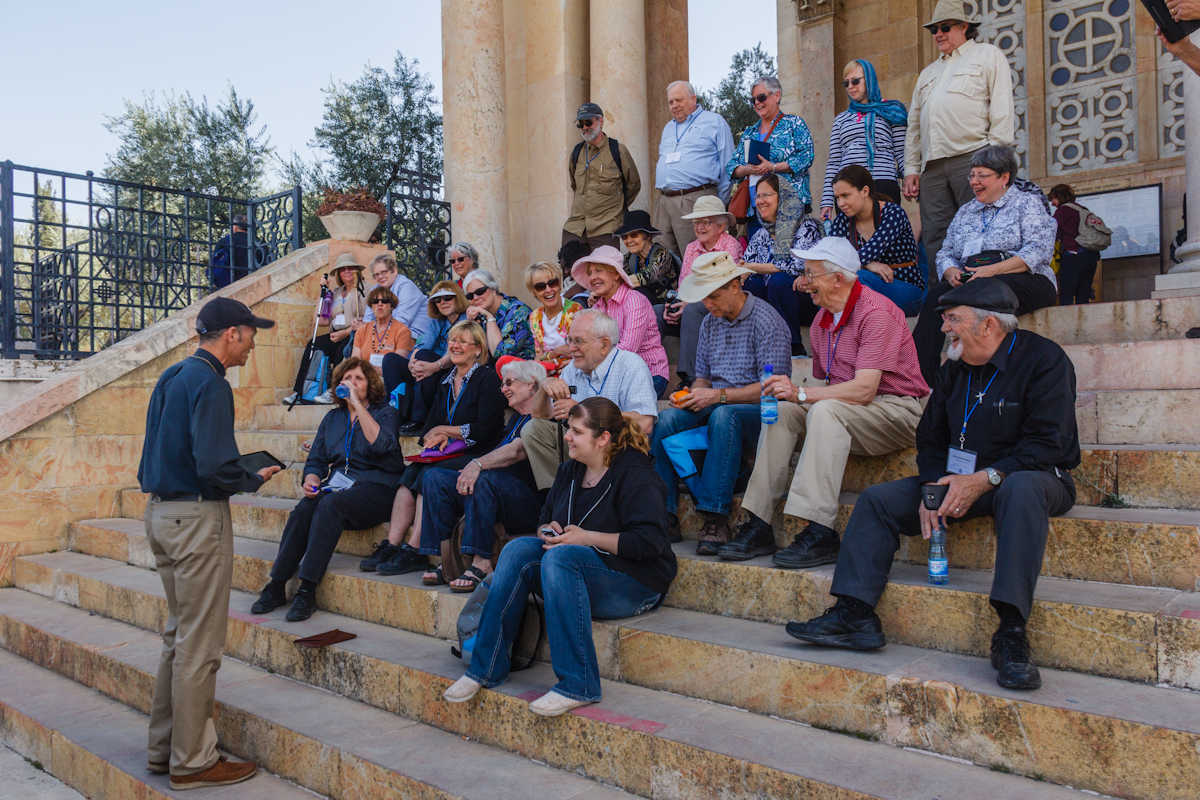
For the pilgrimage of our lifetime, Bishop Julian and Brenda packed 33 of us neatly into 10 incredible, intensive days of history, ruins, Jesus’ life and ministry, prayer and shopping. Frances, our talented and very knowledgeable guide, held us to a tight schedule, making sure we saw every aspect of her well-balanced, detaileditinerary, right down to the hotels and restaurants.  Haleed, our talented bus 2014-03-02-Canon EOS 60D-063-9driver, maneuvered us expertly around tight corners as we held our breath.  They became like family to us.  Some of us had our feet washed for the first time in the Upper Room. How cool to be able to say that! There was no mistake in God assembling us all for this trip; it was healing on many different levels.  If you are fortunate enough to go on this Holy Land Pilgrimage, you will not be disappointed. Make sure you look for, and find, the hearts!  Mrs. Lois Chiovolini

One very import result of going on a trip like this to the Holy Land is how it enables you to visualize names and places that were once only words. Now, when I read about places like Jerusalem, the Temple, the Temple Mount, the Kidron Valley, the Mount of Olives, Gethsemane, and Galilee, just to name a few, they are accompanied by images that are 2014-03-02-Canon EOS REBEL T3i-064-10bursting with visual impact. I am now transported to the actual places of the Bible as I read them! I can also comprehend the relative distances between towns and villages that I couldn’t before…smell the market places…breath in the salt air of Joppa and Caesarea…feel the salty oiliness of the Dead Sea…be embraced by the barren isolation of Qumran and Masada. Not even after years of Bible College and Seminary was I able to grasp such knowledge. I heartily recommend this trip to you for the strengthening and deepening of your faith!  Archdeacon Wayne Buchanan++  

Life Beyond the Grave

Life Beyond the Grave:  What Happens When you Die?

In conjunction with the Diocese of the Armed Forces and Chaplaincy, Bishop Julian Mark Dobbs, Missionary Bishop of CANA, presents an online video teaching series for Lent 2015.

Bishop Dobbs says, “We are all interested in life beyond the grave and what happens to a person at the point of death. This series will allow us to study what the Bible says about life beyond the grave and what happens when we die?”

Screen Shot 2015-02-21 at 17.02.36

Part 1 – Hades: What is Hades and what happens when you die?   Luke 16

Part 2 – Hell: Eternal torment or medieval myth? Matthew 8, Matthew 13, Matthew 22, Luke 13

Part 3 – Heaven: A place prepared by Jesus. John 14

Part 4 – Judgment: The books will be opened; who will be judged? Revelation 20

Part 5 – Questions and Answers

To view the complete series, please click here

A meeting with the State Department

The State Department told me this week that persecuted Assyrian Christians, who are losing their lives at the hands of Islamic terrorists, have no mechanism of direct access to the United States.

Perhaps we did not learn the lesson of history when in a highly publicized event in May–June 1939, the United States refused to admit over 900 Jewish refugees who had sailed from Hamburg, Germany. History tells the story of what awaited these refugees upon their return to Germany.

Are not liberty and justice the great attributes of American society that we must export to the world?

Much shame on the Department of State!

Please pray for Assyrian Christians.

10 Years On!

Ten years ago today, a massive earthquake and tsunami struck just off the coast of Aceh, Indonesia. Over 200,000 people in the region were killed. I visited Aceh just days after the Tsunami and made a number of subsequent visits in an attempt to assist suffering Christians.

Here is my initial video report from 2006. (Note: video contains images that some people might find disturbing)

National Cathedral to host Muslim prayer co-sponsored by Hamas-linked CAIR and ISNA

national-cathredral-Capitol-Escapes-2Jihad Watch has alerted us that Washington National Cathedral, known for hosting presidential funerals and other major spiritual services, will for the first time host weekly Muslim prayer services this coming Friday.

The Cathedral, part of the Episcopal Church, has long held high-profile interfaith events, and some mosques hold services in synagogues or churches if they need overflow space. But organizers said Monday that they are seeking to make a statement by having Muslim leaders come and hold their own midday services in such a visible Christian church.

“We want the world to see the Christian community is partnering with us and is supporting our religious freedom in the same way we are calling for religious freedom for all minorities in Muslim countries,” said Rizwan Jaka, a spokesman with the prominent ADAMS mosque in Sterling, one of the co-sponsors of Friday’s prayers. “Let this be a lesson to the world.”

Click here to read the entire article from Jihad Watch